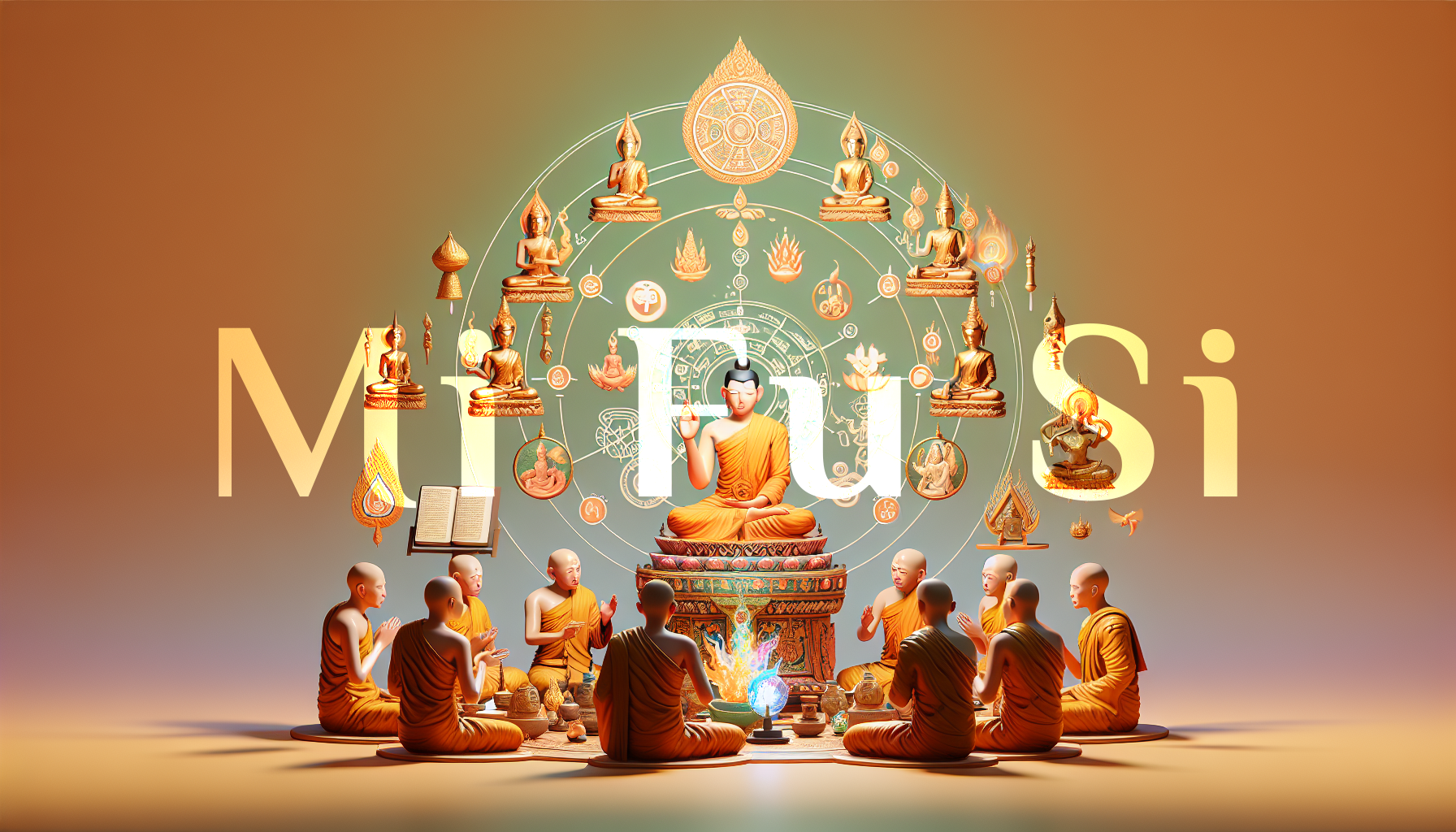
The Singular Source of Religions
(Tất cả tôn giáo đều cùng một nguồn gốc by DongVan on Sat Jun 26, 2010 1:46 pm. Translated by Dian., edited by XiaoBaiYun.)
It’s widely acknowledged that despite their diverse forms and rituals, all religions essentially revere the same Creator of the Universe. This universal entity, whether referred to as God the Father in Christianity, Vairocana Buddha in Buddhism, Brahma in Hinduism, or by other names in folklore beliefs like Heaven or the Jade Emperor, embodies a shared essence across different faiths.
In Buddhism, prominent figures such as Kwan Shih Yin Bodhisattva, the Medicine Buddha, and Amitabha Buddha hold significant reverence. Additionally, the multitude of Buddhas and Bodhisattvas collectively known as “Thánh thần” in Old_Guru Secret Teaching bear resemblance to the Holy Spirit and archangels in Christianity.
In particular, Theravada Buddhist monks in Vietnam, Thailand, Burma, Laos, and Cambodia reject the notion of a Creator and divine beings, asserting that Bodhisattvas and deities hold no power to aid humans. Conversely, a significant portion of monks have been influenced by Brahmanism, which acknowledges the existence of God and superior spirits. These monks clandestinely engage in prayers to these spirits, a practice evident through their use of yantra, spells, and dharanis in various rituals, including exorcisms and requests for success in business or competitions, both for their followers and for personal gain. For instance, Chimdada, along with other Cambodian monks, outwardly professes faith in Sakyamuni Buddha but turns to various spirits, including demons, in times of misfortune.
All religions share a common doctrine and practice, centered around offering prayers to the Creator and divine beings for divine protection in this life and the afterlife.
In Mahayana Buddhism, the path to Nirvana, or enlightenment and liberation from suffering, involves adhering to six perfections: Charity (generosity), Personal integrity (ethical conduct), Patience, Perseverance, Concentration in meditation, and Wisdom. These six criteria bear similarities to the “Tam Cong” requirements in Cao Dai, a Vietnamese religion:
1) Cong Phu: Engaging in practices such as chanting, reciting Buddha’s names, or meditation (provided meditation is viewed as a form of inward prayer rather than a potentially risky means of channeling bodily energies).
2) Cong Qua: Engaging in acts of charity or working towards the benefit of oneself and others.
3) Cong Trinh: Focusing on self-improvement and the cultivation of virtues.
All the different religious practices may practice the Cong Phu part differently, which means they only differ on the outside forms and appearances, but the meaning behind the various practices is the same. Meditation is but another way to focus on spiritualties, similar to a silent form of prayers to Buddha and Heaven (Creator God).
Many religious practitioners fail to recognize the common principles shared across religions, leading to the notion that there exist 84,000 “dharma gates” or religious practices. This proliferation is largely fueled by individuals’ pride in their own faith and spiritual practices. Consequently, some advocate for specific forms of meditation or the chanting of Dharanis, often criticizing the practices of others.
However, these 84,000 religious practices are essentially variations of a single Religion—the worship of the Creator and the Divinities. The distinction lies in the effectiveness of spiritual practices, often evidenced by miracles and the degree thereof.
The Initiation ceremony of Old_Guru Secret Teaching involves the transmission of the Secret Seal, which authorizes the study of mysticism or metaphysical principles to the aspirant. With this Seal, individuals gain the ability to communicate with Heaven’s court and receive guidance from Thánh thần (Buddhas and Bodhisattvas in Ten directions). Consequently, whoever possesses the Secret Seal can perform or witness miracles, irrespective of their religious affiliation or practices.
Contrary to the beliefs of some Old_Guru Secret Teaching practitioners who emphasize the chanting of Dharanis as the sole method to manifest miracles, this view dismisses other religious practices such as prayers or the repetition of Buddha’s name as ineffective.
We can observe that Dharanis themselves hold no mystery. When translated into Vietnamese, they are simply expressions of adoration, praising divine merits and offering prayers to the Buddha and Bodhisattvas. This is much akin to prayers extolling the Creator and Deities in Brahmanism or the Christian prayer “Our Father in heaven.” For instance, the Dharani “Om mani padme Hum” translates to “the precious jade in the lotus,” offered to Kwan Yin Bodhisattva, or the Great Compassion Dharani, which begins with “namo hac ra dat na,” meaning “I respectfully seek refuge with the limitless and endless Heart in all Ten directions.”
Beyond the shared faith and religious practices across different religions, their fundamental principles align with societal laws and morals. All religions condemn actions such as killing and stealing, advocating for fairness among human beings. Moreover, they emphasize compassion, charitable deeds, and the pursuit of spiritual beauty, truth, and goodness.
In summary, all religions and spiritual schools share fundamental beliefs, teachings, and precepts, all of which either originate from or lead back to the Creator and Deities. However, as long as monks or priests hold onto religious discrimination and practice with vanity, they will continue to criticize and attack one another, even engaging in anti-religious activities such as competing for dominance through violence.
DongvanRevised 3/4/24
Related Post
The Miraculous Tree of Tsong Khapa
The Miraculous Tree of Tsong Khapa Linh thụ Tây Tạng; by Dianichi on Sun Nov 23, 2008 10:27 am. The...
Chapter II: The Transmission Lineage
The Almighty Buddha Great Sun, or Mahavairocana Buddha preached Secret Buddhism. Samantabhadra Bodhisattva who was the former attendant of Sakyamuni...
How to change one’s fate or the nation’s
How to change one’s fate or the nation’s (BÍ QUYẾT SỬA ĐỔI VẬN MỆNH - Submitted by Vinhphuc on Sep...
Story 12 – East-West Mystical Encounter
Story 12 -East-West Mystical Encounter Câu chuyện số 12 - Huyền bí Đông và Tây Phương by Hoctro-gia on 12...

Story 10 -Mystical Practice of Invibility
Story 10 -Mystical Practice of Invibility Câu chuyện số 10 - Phép Tàng Hình by ThầyGià on 12 November 2008,...
THE DRAGON’S JADE PEARL
THE DRAGON'S JADE PEARL Ngọc Long Châu by Bạch Hạc on 07 May 2016, 11:53 - translated by Horangi. I...
Spirit Guide’s teaching of souls
Spirit Guide's teaching of souls Vị độ dạy về linh hồn by SenNganCanh on Dec 18, 2017 at 10:55 pm....
The High Priestess (II) Reversed
The High Priestess (II) Reversed (Card Descriptions Based On Original Rider-Waite Colors – Still Under US Games Inc. Copyright) Keywords...