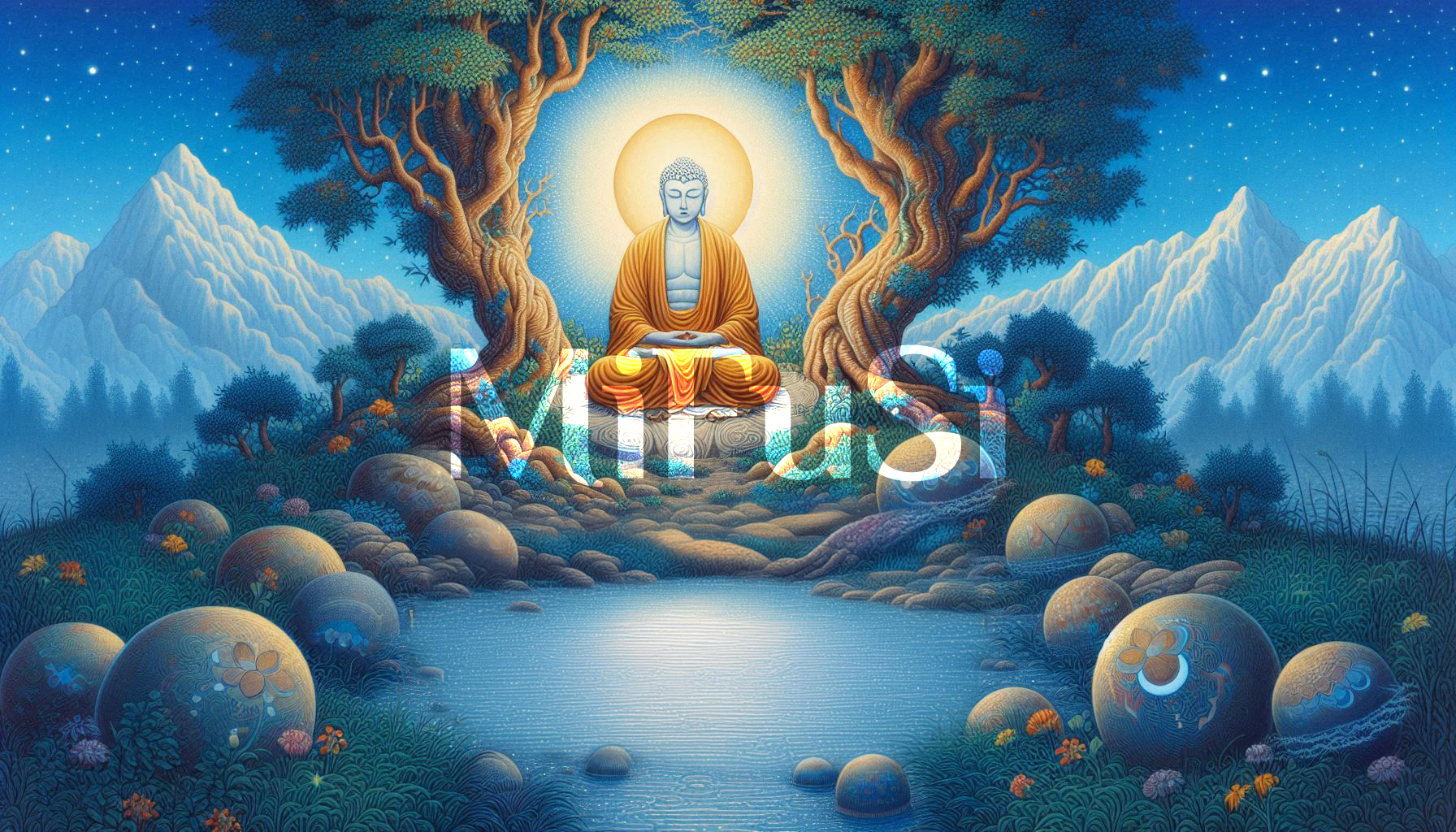
The seeking for an initiation
Yeshes G. Yatso, a graduate monk from a prestigious Buddhist university, felt dissatisfied with his level of knowledge. He spent several years in contemplation but remained unfulfilled.
Upon advice from an elder chief lama, he embarked on a journey to meet a reclusive hermit monk residing on a distant mountain, hundreds of miles away from the monastery. Although the journey was relatively short, it was challenging, involving traversing a vast desert and scaling a high mountain peak. Despite the hardships, Yeshes set out immediately, eventually locating the cave where the hermit lived. Kneeling at the entrance, he earnestly requested to become the hermit’s disciple, but received no response.
After two weeks of kneeling at the cave entrance and pleading, Yeshes was suddenly confronted by the hermit, who sternly ordered him to return to his monastery. On his way back, he got lost in a severe snowstorm and didn’t make it back to the monastery for several weeks. However, after resting and regaining his strength, he returned to kneel before the hermit’s cave. One day, the hermit spoke up:
“You foolish man, why don’t you seek teachings from renowned masters in Lhasa or wise scholars in Kalimtong?”
Yeshes pleaded earnestly for the hermit’s guidance. Finally, the hermit agreed to teach him but said: “I want to know why, despite studying scriptures and practicing meditation for many years, you seem to have learned nothing. What is troubling you?”
Yeshes responded, stating that he had diligently practiced meditation, staying focused on the mantras and keeping his mind undisturbed, yet he had not achieved any results.
The hermit reprimanded Yeshes sternly:
“Your eagerness and stubbornness hinder your progress. How can you achieve enlightenment when you cling so desperately? Merely reading scriptures without grasping their essence, and harboring a mind as insatiable as trying to turn sand into rice won’t lead you anywhere! Understand that fixation on external rituals is futile when there are methods to practice and realizations to attain. Meditation isn’t confined to sitting silently and chanting. It encompasses all actions—walking, standing, lying down, and conversing. The essence lies in maintaining a tranquil mind, free from desires and attachments, flowing naturally with life. There’s no need for extreme asceticism or striving for elusive goals. Instead, embrace a natural way of living, being mindful of every action and emotion. Remain humble and composed, regardless of circumstances, always aware and serene. That is the essence of true meditation.”
Opinion
This text beautifully captures the essence of meditation and spiritual practice. It highlights the common misconception among mystic devotees who seek enlightenment or extraordinary experiences through meditation, only to find themselves frustrated when such goals remain elusive. The wisdom of the Zen Master reminds us that true spiritual practice lies in embracing simplicity and being content with being ordinary. It emphasizes the importance of avoiding fanaticism, asceticism, and anything that goes against the natural flow of life. Truly inspiring words for anyone on a spiritual journey.
Related Post

Meeting in the clouds
Meeting in the clouds Ngày đoàn viên By duynguyen on Nov 30, 2017 at 1:10 am, translated by chunglinho, edited...

A Violin Performance by Divine Force
A Violin Performance by Divine Force LÀM ĐẠO VỚI CÂY ĐÀN VIOLIN posted by viendung on 07 Apr 2017, 12:04,...

WITNESSING MEDIUMS AND SPIRITS AT WORK
WITNESSING MEDIUMS AND SPIRITS AT WORK (Một phiên làm việc của thần linh - sent by Thachanhtrang ngày 02 Tháng...

3 failed attempts at getting the Celestial Scroll
3 failed attempts at getting the Celestial Scroll 3 LẦN GIAN NAN XIN THỈNH LÁ THIÊN THƯ by Ngọc Ẩn...
Story 11 – A mysterious illness
Story 11 - A mysterious illness Câu chuyện số 11 - Bệnh Vô Hình by ThầyGià on 12 November 2008,...
Good luck Yantra
Good luck Yantra All of these yantras have magic powers and can only be used by those who have been...
Guided by my departed uncle
Guided by my departed uncle Dear Grand Master and Teacher, Greetings, Duyen Ngo and fellow Dharma siblings, I'm sharing my...
Story 6 – Deity Le Van Duyet
Story 6 - Deity Le Van Duyet Câu chuyện số 6 - Thần Lê Văn Duyệt by ThầyGià on 12...