Insight on Freemasonry
An Insight on Freemasonry by Dianichi – translated from Vietnamese by Horangi
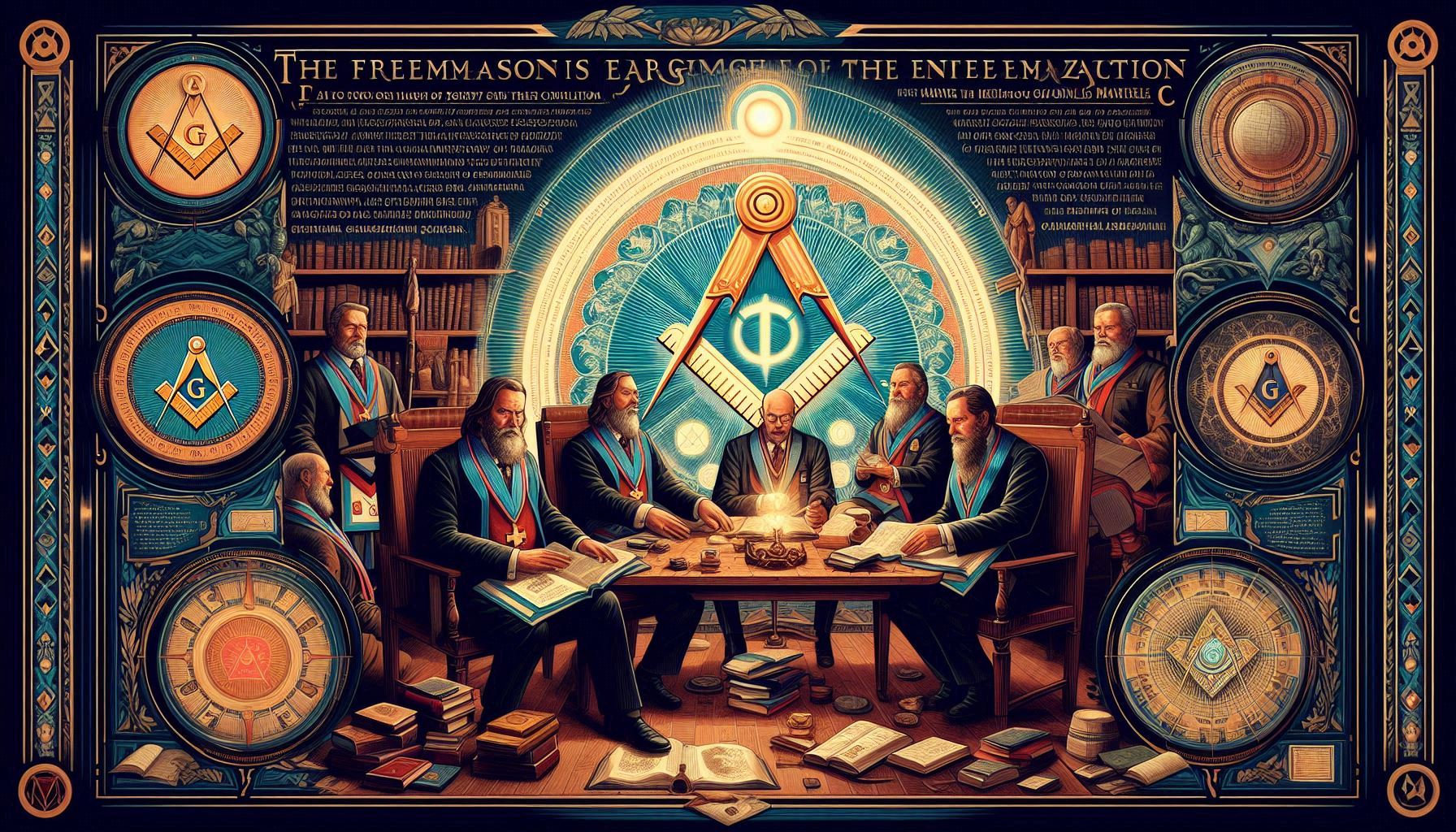
The Freemasons, often perceived as a secretive society, trace their origins to mystical practices since the dawn of civilization. Officially emerging in the 16th century, Freemasonry has evolved into a global fraternity known by various names, wielding significant influence worldwide. With approximately 7 million members globally, including 2 million in the United States, its ranks are predominantly filled with society’s leaders and elites. Around 50,000 books have been written about Freemasonry.
Freemasons uphold a belief in a Supreme Being and advocate for moral integrity, aiming to serve humanity irrespective of religious or racial distinctions. Despite its mystical roots, the transmission of its secretive knowledge has either been lost over generations or kept exclusive to a select few within its leadership. The vast majority of members are either unaware of or indifferent to the mystical foundations of the order, often dismissing such topics as mere superstition when raised. They view Freemasonry primarily as a moral and ethical brotherhood dedicated to the betterment of mankind, without delving deeper into its esoteric aspects.
This perspective mirrors the approach of practitioners of Mat Giao (Secret Teachings) who remain oblivious to the mystical foundations of Mizhong. They sometimes unjustly criticize fellow mystics for following what they perceive as an ‘Evil way.’ Historical accounts of Old_Guru Secret Teaching highlight the extraordinary magical feats performed by its patriarchs and founders, including Tsong Khampa, Padma Sambhava, and others in Tibet, as well as figures like Subhakarasimha and Vajrabodhi in China, who served as royal teachers across three dynasties.
Freemasonry’s ancient texts describe rituals that honor deities, drawing on Egyptian and Greek traditions. Its adherents pledge allegiance to the Absolute Truth, a concept interwoven with mysticism, miracles, and divine occurrences worldwide. Mandy P. Hall discusses the qualifications for becoming an Initiate in these Mysteries, arguing that miracles are not exclusive to the Bible. He identifies prejudice and laziness as the main barriers to engaging deeply with mysticism.
Without miracles and divine phenomena, religion would merely become a moral community or a philosophical school, akin to contemporary Freemasonry. The essence of Freemasonry and any religion lies in its distinct mystical system, which is believed to originate from the highest divine authorities, including the Buddhas of the Ten Directions. This represents the Absolute, Eternal Truth that has existed since the dawn of time.
Dianichi
updated 3/14/24
Freemasonry is characterized as a dual-layered organization, where a public fellowship conceals a more esoteric inner circle dedicated to ancient mystical traditions. The distinction between the outer, socially and ethically oriented group, and the inner, more spiritually focused membership, is crucial for understanding Freemasonry’s true nature and origins. Although contemporary Masonic scholars often trace their roots to medieval craftsmen’s guilds, some acknowledge deeper connections to ancient Mysteries, suggesting a more profound, philosophical, and religious foundation.
Despite Freemasonry’s rich mystical heritage, many modern Masons are skeptical of interpreting their symbols in a transcendental light, mirroring a wider modern disinterest in mysticism. However, historical figures like Albert Pike and the use of rituals reminiscent of ancient initiation rites point to Freemasonry’s enduring link with mystical pursuits. Ultimately, Freemasonry embodies a quest for divine wisdom, challenging its members to look beyond the material and ethical, towards a deeper understanding of the mysteries of existence.
The U.S. Presidents who were confirmed Freemasons include:
George Washington
James Monroe
Andrew Jackson
James Polk
James Buchanan
Andrew Johnson
James Garfield
William McKinley
Theodore Roosevelt
William Howard Taft (often listed as Howard Taft)
Warren G. Harding
Franklin D. Roosevelt
Harry S. Truman
Gerald FordThese presidents were part of a tradition that values fraternity, ethical conduct, and philanthropy, with Freemasonry having a significant historical influence on American society and its leaders.
Related Post
Invisible Deities of Career
Invisible Deities of Career (Tổ vô hình các ngành nghề submitted by Khánh-am on 24 Mar 2009 - translated by...
Wish Fulfilling Yantra #28 – Conversation with a lama
Wish Fulfilling Yantra #28 – Conversation with a lama TCTĐ số 28: đàm đạo với “pháp vương” by thachanhtrang on...
Chapter I: VI – HOMA (Part 6/6)
VI. HOMA (Goma, jap): Homa is the "Fire" ritual meditation. Originating in ancient India, it was later appropriated to Buddhist...
JIANG ZIYA LEAVES THE MOUNTAIN
The Supreme Ruler has assigned Grand Master Yuan Shi Tian Zun the responsibility of assessing disciples' virtues and vices, and...
A Guided visit to Hell
A Guided visit to Hell Xuống địa ngục by Thuận Pháp - translated by Bluesky - edited by Horangi I...
Heaven’s Plan (By Mysticism Scholar Duc Quy)
Heaven's Plan (By Mysticism Scholar Duc Quy) (Thiên cơ cư sĩ Đức Quý by Lĩnhnam on Oct 15, 2011 11:23...
Truth and Illusions in Mysticism
Truth and Illusions in Mysticism (Giả Thật trong lãnh vực Huyền Bí by Dianichi on 16 June 2009, 14:04 -...
A Miraculous Healing
A Miraculous Healing Ân phước được chữa bệnh posted by brightmoon - 16 Tháng 8 2018, 19:50, translated by Horangi....