Atheism vs Blind Believer
The issue of Faith in major religions
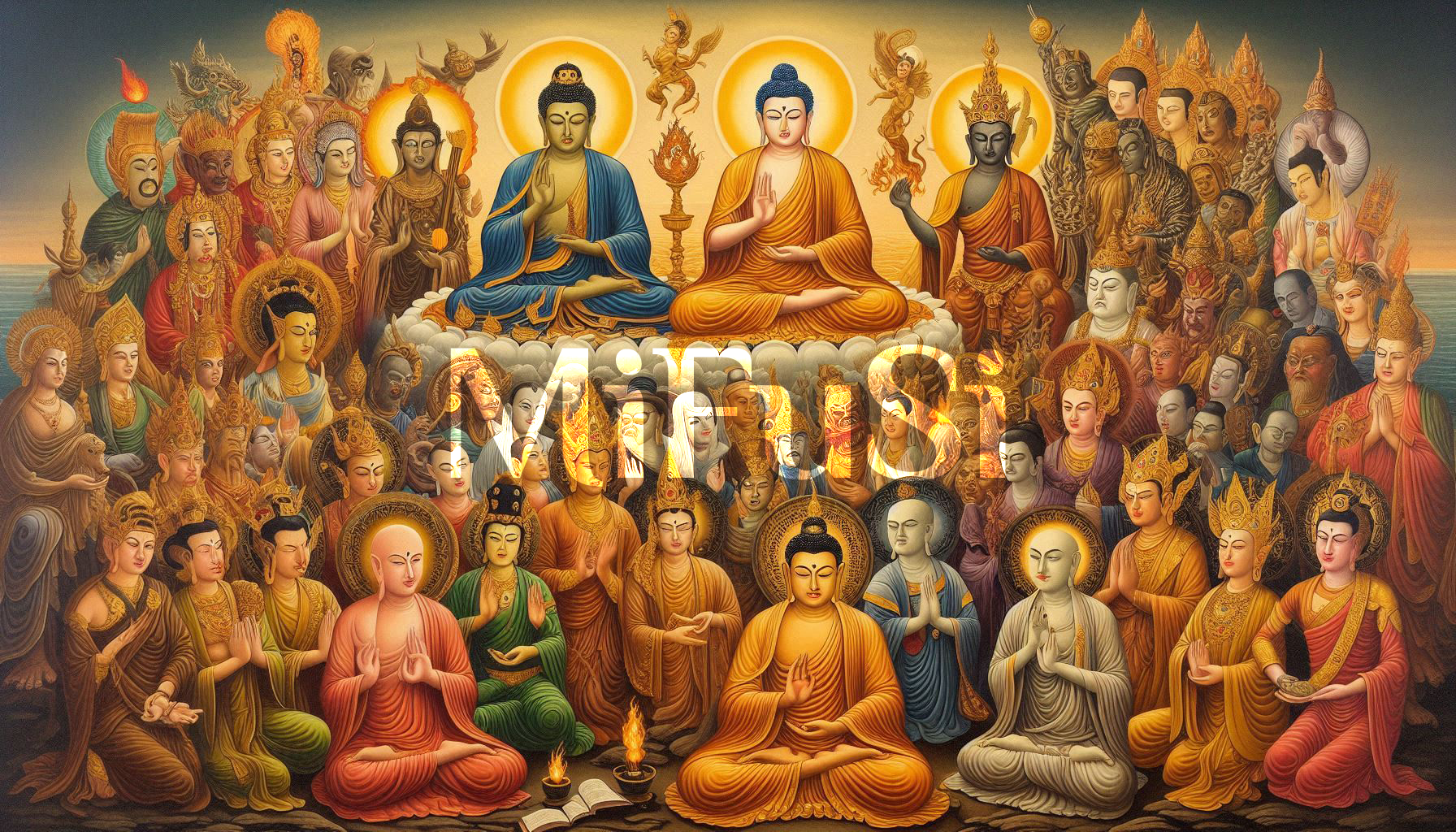
The concept of faith varies significantly across major religions. In Theravada Buddhism, Sakyamuni Buddha is revered as the supreme being, while figures like Kwan Yin Bodhisattva and Amitabha Buddha, along with other Buddhas of Mahayana doctrine, are considered malevolent entities due to their absence in the original Buddhist scriptures.
Conversely, Mahayana Buddhists regard Theravada practitioners as ignorant and narrow-minded individuals, viewing them as outsiders with inflated egos. Furthermore, Buddhism, in general, perceives Hinduism, Judaism, and Christianity as misguided, primarily because Buddhism rejects the notion of a singular, all-powerful creator deity, deeming such beliefs as fundamentally flawed.
Christianity is characterized by various denominations, primarily Catholics and Protestants. One notable difference lies in their beliefs regarding the Virgin Mary, with Catholics venerating her while Protestants do not. Moreover, certain Protestant denominations assert that Jesus is not only the Son but also the Creator of all things, challenging the traditional Trinity doctrine of the Father, Son, and Holy Spirit.
In Judaism, Jesus is not recognized as the Creator or the Messiah (Savior). Consequently, Jewish priests historically accused him and sought his crucifixion due to these theological disparities.
Islamic doctrine regards Abraham as the first prophet, followed by Jesus as the second, and Muhammad as the third and final prophet, granting Muhammad a monopoly on the prophetic title. Despite both Islam and Christianity worshiping the same Creator, historical conflicts such as the Crusades have led to violence between them, continuing to the present day.
In Brahmanism and Hinduism, belief centers around Brahma (the Creator), Vishnu, and Shiva. They disregard figures like Sakyamuni Buddha, Jesus, and Muhammad as latecomers unworthy of attention.
In essence, every religion perceives others as malevolent. Discussion based solely on faith among fanatics and chauvinists results in endless, unresolved arguments. While religious teachings advocate love and compassion, religion itself often becomes a source of hostility and violence.
Therefore, the study of religion should not rely solely on faith but rather on reason and a scientific approach. Truth must be valued, and compassion practiced. If religious doctrines are rife with dogma and superstition, Karl Marx’s assertion that “religion is the opium of the people” holds some truth.
It’s preferable to be an atheist than a blind believer. At least atheists lack hatred and do not kill in the name of religion or God.
Revised 3/7/24
Related Post

Good luck Yantra
Good luck Yantra All of these yantras have magic powers and can only be used by those who have been...
Divine signs during the Initiation Rite
Divine signs during the Initiation Rite MỘT SỐ ẤN CHỨNG ĐIỂM ĐẠO HAY TRONG MÙA VẢI THIỀU by thachanhtrang on...

JIANG ZIYA’S MARRIAGE
After showing respect to his master and bidding farewell to his friends, Jiang Ziya departed from the mountain and journeyed...

Dragon Flower Prophecies
Dragon Flower Prophecies Những tiên tri liên quan đến hội Long hoa; by NamSơn on Sat Jan 31, 2009 3:20...

THREE BOWS – ONE SALUTE
In recent news from Tuổi Trẻ (Youth) newspaper, Venerable Thích Tâm Mẫn of Hoằng Pháp Pagoda commenced a pilgrimage from...

A Miraculous Healing
A Miraculous Healing Ân phước được chữa bệnh posted by brightmoon - 16 Tháng 8 2018, 19:50, translated by Horangi....

Worldwide Old Guru Secret Teaching
Worldwide Old Guru Secret Teaching MẬT TÔNG CỦA THIÊN ĐÌNH; by hoatam on Sun Mar 08, 2009 10:02 am. Tibetan...

Spiritual experience of Hue Anh
Spiritual experience of Hue Anh Trang đạo của Huệ Anh by Hue Anh on 06 Feb 2018, 15:03 - translated...