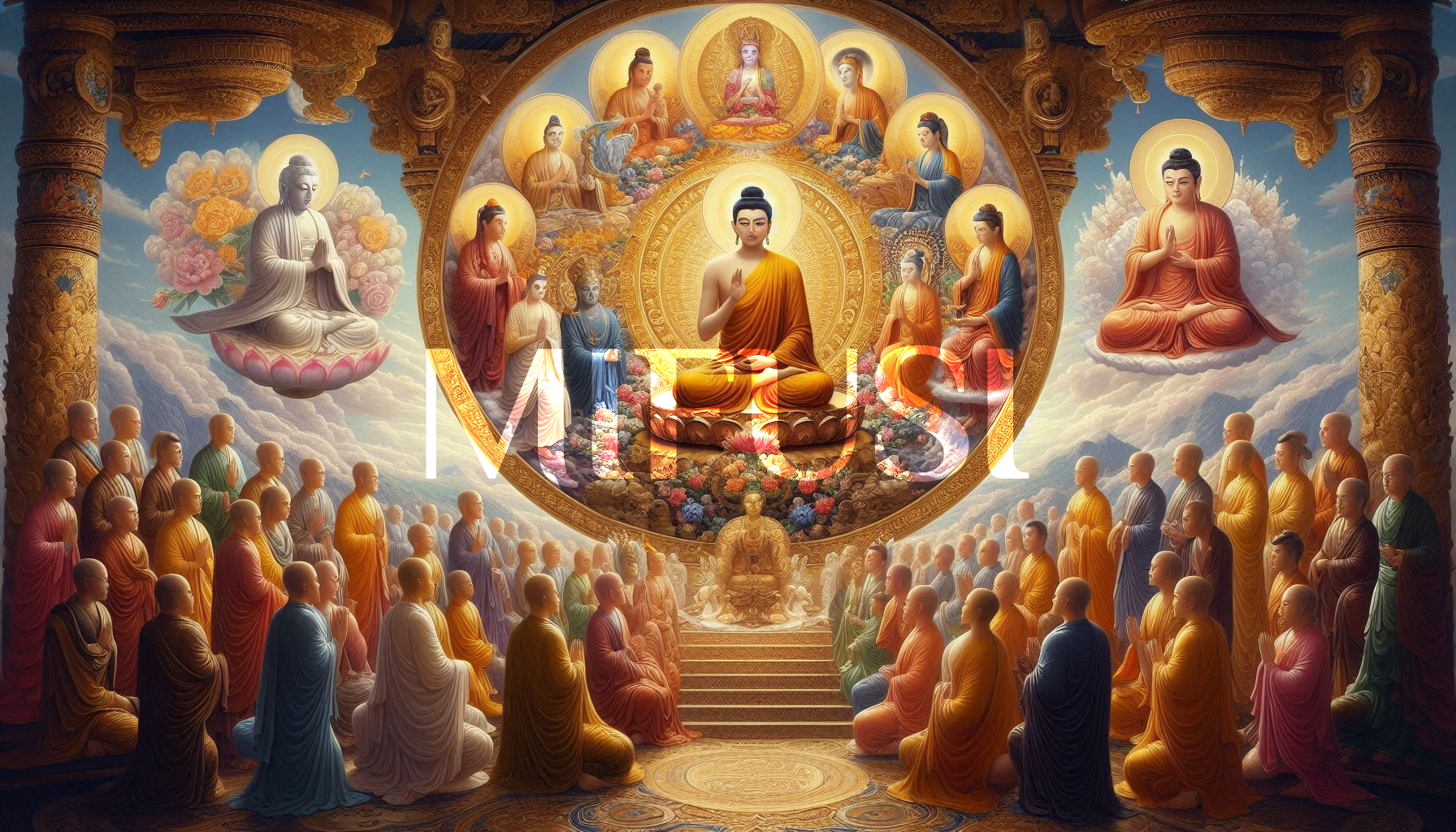
Atheists Trumps Fanatics
Thà là người vô thần… by Dianichi on Wed Nov 19, 2008 3:04 pm
Sure, here’s a simpler version for easier understanding:
“In examining various religious beliefs, it becomes evident that each claims to possess absolute truth within its teachings, despite divergent doctrines. For instance, Theravada Buddhists direct their devotion solely to Sakyamuni Buddha, while regarding other Buddhas and Bodhisattvas, such as Amitabha and Kwan Yin in Mahayana tradition, as inferior or even malevolent due to their absence in Theravada scriptures. Conversely, Mahayana Buddhists consider Theravada teachings inferior and view Theravadins as excessively egotistical and fanatical.
Both Mahayana and Theravada sects reject the concept of a creator God, thus dismissing Hinduism, Judaism, and Christianity as false religions. Within Christianity itself, divisions arise between Catholic and Protestant denominations regarding doctrines such as the veneration of the Virgin Mary and the nature of Jesus Christ. Meanwhile, Judaism’s rejection of Jesus as the Savior has historical roots, leading Jewish leaders to accuse him of blasphemy and seek his crucifixion by Roman authorities. Islam, on the other hand, honors figures like Noah, Abraham, Moses, Jesus, and Muhammad, with the latter revered as the greatest and final prophet, potentially to safeguard exclusive messianic claims.
Despite sharing a common patriarch and worshiping the same God, Islam and Christianity have been embroiled in numerous conflicts throughout history. Hinduism, characterized by its belief in Brahma, Vishnu, and Shiva, disregards figures such as Sakyamuni Buddha, Jesus, or Muhammad as inconsequential latecomers.
These observations reveal how adherents of different faiths often regard others’ beliefs as false, leading to conflicts fueled by entrenched convictions. Despite religions espousing ideals of compassion and forgiveness, they frequently become breeding grounds for animosity and strife. Consequently, it is imperative to approach spiritual matters with rationality and a scientific mindset, promoting truth and embracing religious tolerance.
In considering Karl Marx’s assertion that “Religion is the opiate of the people,” one cannot dismiss its resonance. It underscores the potential for religious teachings to be mere dogmas and ideologies, devoid of deeper truth. In this light, one might argue that it is preferable to embrace rational atheism over dogmatic theism marked by intolerance and hatred. While an atheist may not engage in religious intolerance, a dogmatic theist often wields the name of God to criticize or harm others, perpetuating discord instead of fostering understanding and harmony.
(further reading: Nominations of the Gods and Mysticism- General outlines of religions by Scholar Trieu Phuoc)
(revised 3/1/24)
Related Post
Chapter VI: V & VI – The Cundi Dharani spoken by the Mother of Seven Kotis Buddhas
V. The Cundi Dharani spoken by the Mother of Seven Kotis Buddhas Tang Dynasty, India, Tripitaka master Amoghavajra translated from...
Divine signs during the Initiation Rite
Divine signs during the Initiation Rite MỘT SỐ ẤN CHỨNG ĐIỂM ĐẠO HAY TRONG MÙA VẢI THIỀU by thachanhtrang on...
Chapter V: THE FRUITS OF SPIRITUAL CULTIVATION
I. Auspicious Dreams. O Subahuh! The reciting of the mantra must not be too slow, too fast, too loud or...

THE ENIGMATIC MONK
In 1914, when China invaded Tibet, the 13th Dalai Lama had to flee to India for refuge. This presented a...
Dragon Flower Prophecies
Dragon Flower Prophecies Những tiên tri liên quan đến hội Long hoa; by NamSơn on Sat Jan 31, 2009 3:20...
RELIGIOUS VIEWS ON THE ORIGIN OF LIFE AND THE UNIVERSE
In attempting to study religion, people often get frustrated and have much to think about the many serious controversial religious...

GLOBAL PERIL
GLOBAL PERIL (Thế giới trên bờ vực thảm họa - by Rainbow on Thu Aug 16, 2012 - translated by...
A grandchild from the future
A grandchild from the future Đứa cháu ở tương lai by kiemmadocco on Dec 05, 2017 at 8:57 pm. Translated...